
The Architecture of
Validation
Analytical integrity at Pacific Quantum Research is not a post-process check. It is a structural requirement. We employ quantum-inspired data modeling to navigate high-dimensional business challenges where traditional linear analytics fail to find the signal.

Phase 01: Substrate
Quantum-Inspired Data Modeling
Rather than relying on brute-force computation, our models leverage state-space reduction techniques inspired by quantum mechanics to map complex interdependencies within business systems.
- 01 Dimensionality Reduction via Tensor Networks
- 02 Probabilistic Path Optimization
- 03 Entanglement Simulation for Market Variables
The Logic of Probabilistic Stability
Standard statistical tools often fail to account for "fat-tail" risks in volatile markets. Our research lab utilizes advanced analytics to generate AI insights that prioritize robustness over temporary optimization. We treat every data point as a probability amplitude, allowing us to simulate millions of divergent scenarios before recommending a strategic path.
This approach ensures that results remain valid even when the underlying market conditions shift unexpectedly. By modeling the uncertainty itself, we provide a defensive layer to high-stakes decision-making.
Hardware-Agnostic Code
While inspired by quantum mechanics, our algorithms are optimized for current enterprise-grade classical high-performance computing (HPC) clusters.
Ethical Guardrails
Every data model is subjected to rigorous bias auditing and transparency checks to ensure that AI insights align with human-centric governance.
Double-Blind Verification.
Validation is not an internal echo chamber. We operate a tiered verification loop that subjects every analytical outcome to three distinct layers of scrutiny.
Algorithmic Stress Testing
We expose models to synthetic "extreme event" datasets to identify breakage points and hidden correlations that only emerge during systemic shocks.
Peer Model Discordance
Results are compared against diverse modeling methodologies. When models disagree, we investigate the root "dissonance" to refine our quantum analytics accuracy.
Empirical Grounding
Final outputs are validated against real-world historical outcomes to calibrate the predictive delta, ensuring the lab maintains measurable real-world utility.
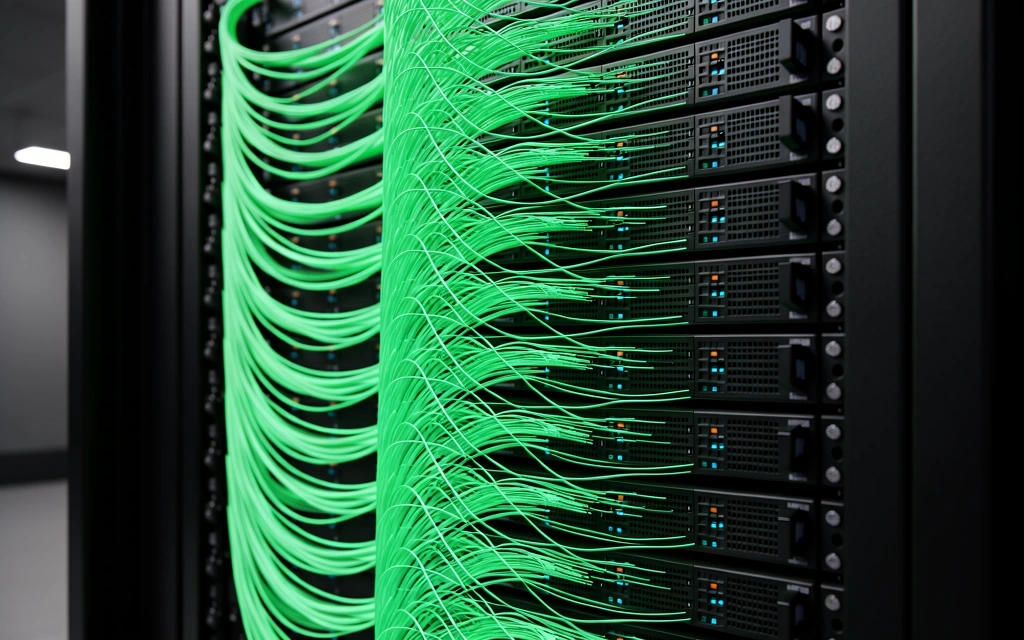
Translating Theory to Operations
Seamless Deployment
Our methodologies are designed to integrate with existing enterprise data pipelines. We provide the "analytical engine" that sits quietly behind your core systems, delivering continuous AI insights without requiring a total infrastructure overhaul.
Dynamic Recalibration
Markets evolve. Our quantum analytics models are inherently iterative, recalculating their optimized states as new data enters the system, preventing the "model drift" that plagues traditional static analytics.
Institutional Clarifications
Full Methodology Whitepaper
Request our 2026 methodology audit for complete technical disclosures.
Pacific Quantum Research
Jalan Ampang 92, Kuala Lumpur
+60 3 2145 8870
info@pacificquantumresearch.digital
Mon-Fri: 09:00-18:00